



Public hearing
workshops
CRZ
workshops
RTI
training
Writing
representations
EIA
analysis
Pre-litigation
training



Our work
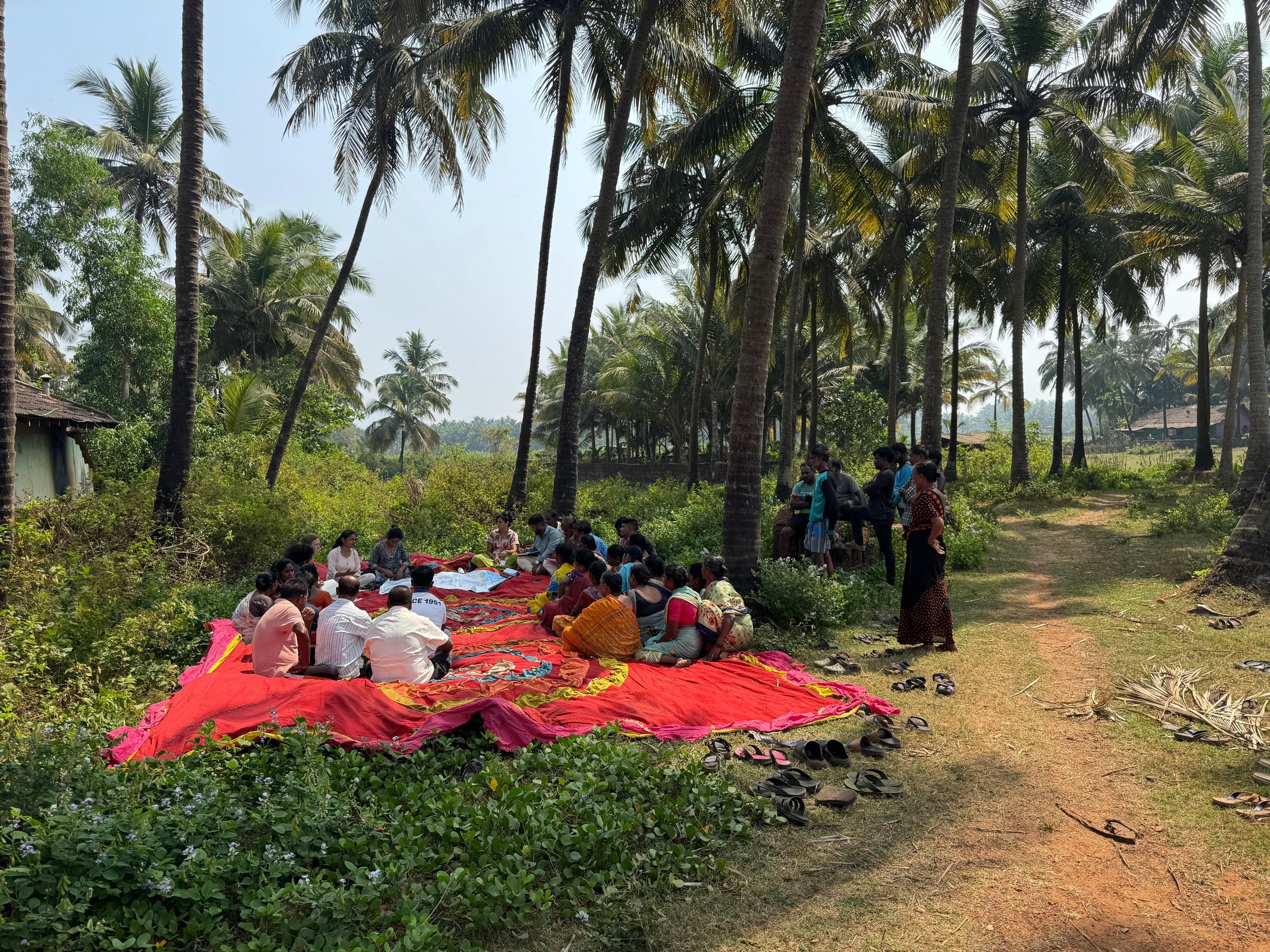
As a legal aid organisation, LEAF’s job is to assist communities in addressing their legal issues, particularly when it comes to large infrastructure and development projects.
LEAF conducts workshops that enable people to understand their rights and participate in the democratic process, in order to protect their land and livelihood.
CRZ workshops
Do you live or work along the coast?
Need to understand how the CRZ works?
We can help.
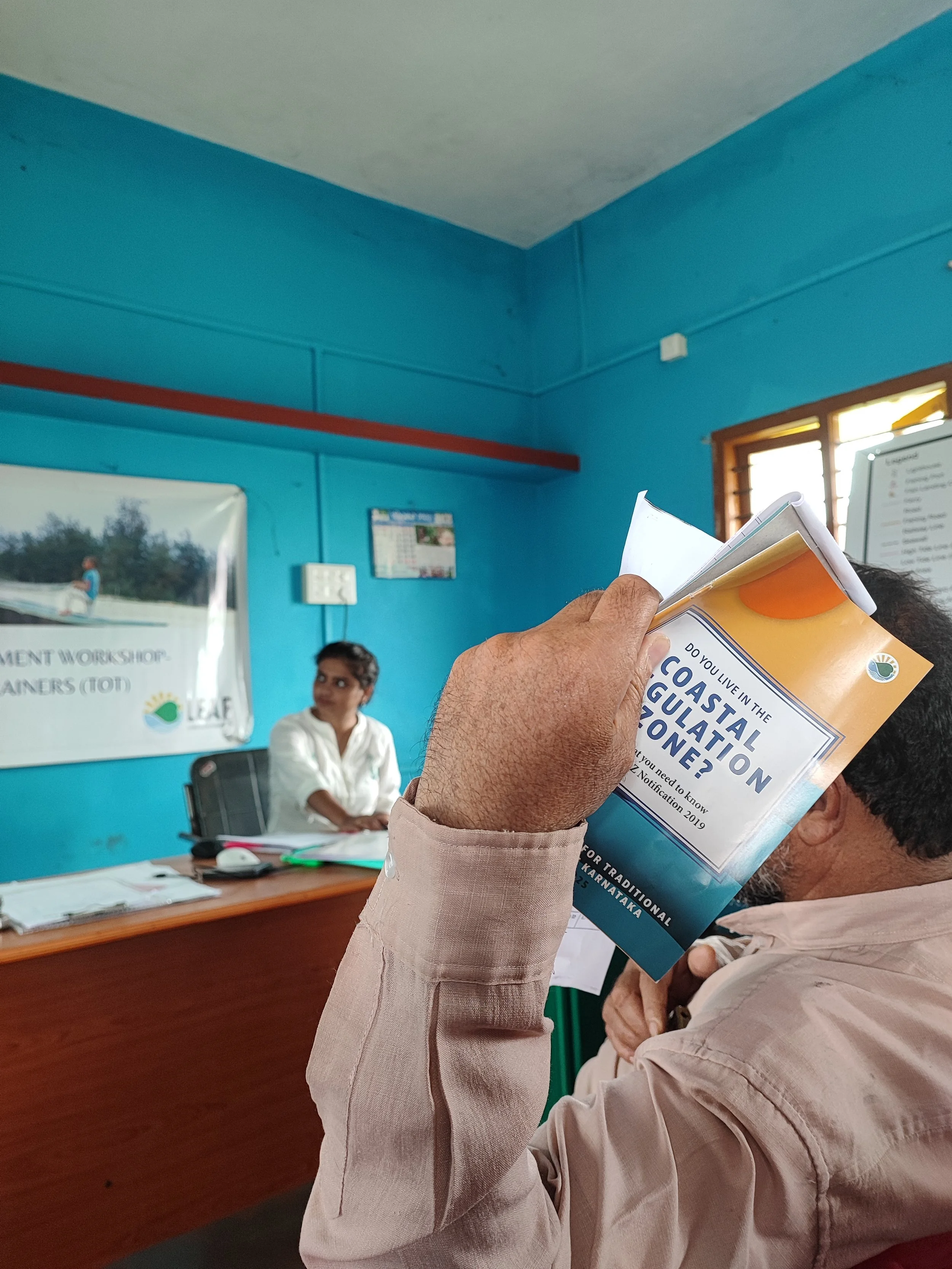
THE COASTAL ZONE MANAGEMENT PLANS (CZMP) can boggle the mind, if you don’t know what you’re looking at. Yet coastal communities need to know how to read them in order to protect their right to live and work on the coast.
CZMP maps are drawn up in accordance to the Coastal Regulation Zone Notification, 2019. They essentially classify and protect land use along India’s coastline. It becomes a vital document when large infrastructure and other development projects come up on the coast.
For instance, commons—such as fishing landing centres, ship-building and net-mending yards, fish drying areas, boat parking areas—are colour-coded, and fall under different levels of protection; human habitation is represented by survey numbers; different states have different degrees of classification.
LEAF has trained thousands of fisherfolk on their rights under the CRZ law.
LEAF’s workshops help fisher communities participate in the exercise to redraw the CZMP maps according to the updated CRZ 2019 notification (as opposed to the older CRZ 2011 notification). The workshops also help communities to use the maps to figure out who owns what type of land, which are the designated coastal commons, and how land use is changing.
Further LEAF’s CRZ module, breaking down the law and legal rights, supplements such training workshops.
Public hearing workshops
Is there a public hearing happening near you?
We can help you prepare.
WHAT IS DEVELOPMENT without the participation of the public? Don’t answer that.
A public consultation - which comprises public hearings and written responses - are an important part of the Environmental Impact Assessment (EIA) for infrastructure projects in India. Without it, an EIA is incomplete. That means, India’s legal system recognises the role of humans as part of the environment.
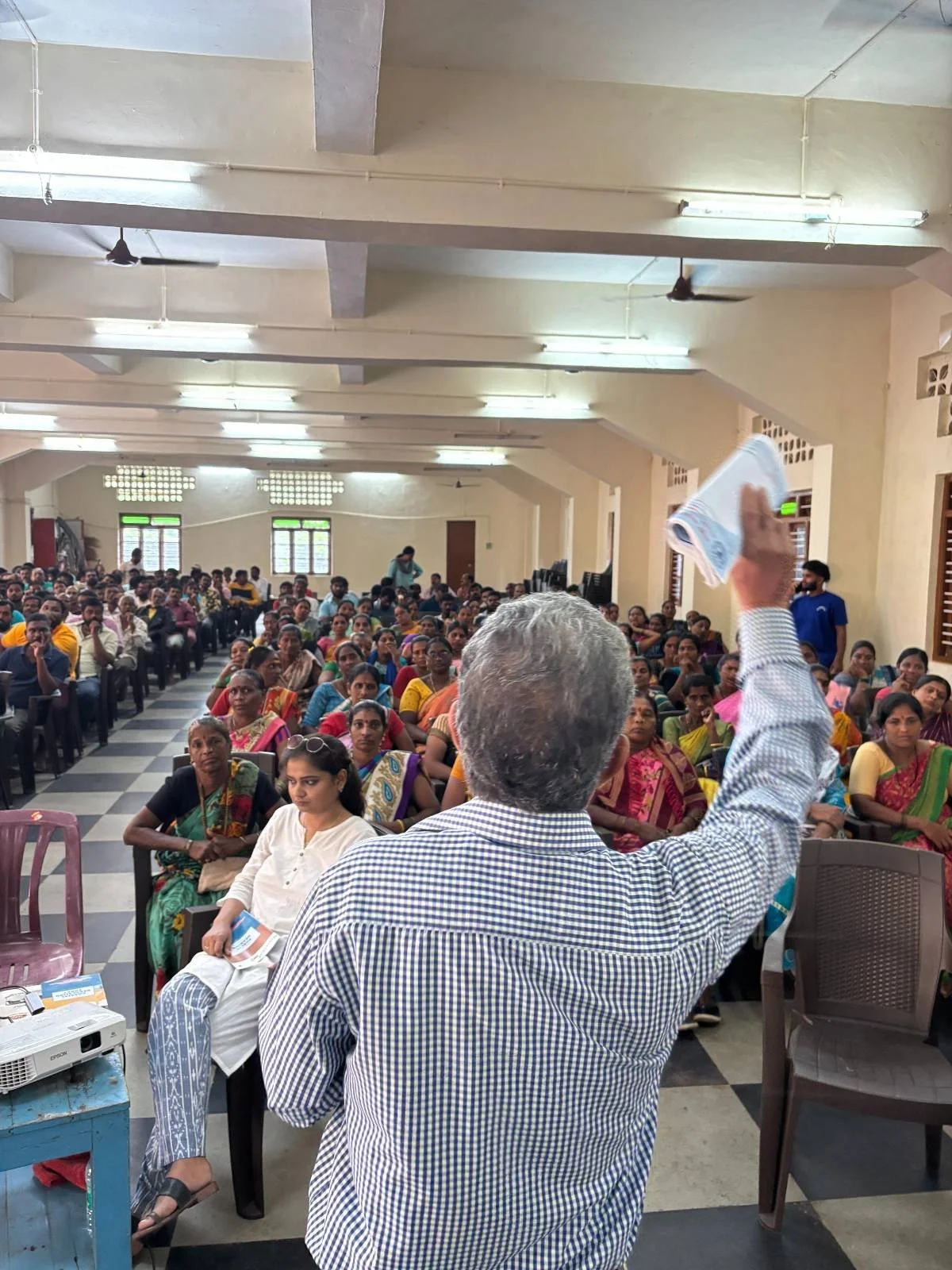
LEAF facilitates workshops for people and communities who need to participate in public hearings. At these gatherings, affected communities, concerned citizens, scientists, activists, environmentalists, etc, can appear and publicly voice their concerns about a project.
From project proponent and relevant government body, to local government, and the people, everyone has a role to play. LEAF workshops aim to explain each of these roles, highlight the course of action if due process is not followed, and prepare people to speak about their concerns.
LEAF’s public hearing module also breaks down the legalities of public consultations, its dos and don’ts, and landmark judgements that have helped this rule along.
“The purpose of public hearing, it may be noted, is to know the concerns of the affected people and to incorporate their concerns appropriately into the Environment Management Plan….”
—Supreme Court
Alaknanda Hydro Power Co Ltd v. Anuj Joshi, 2013
Writing representations
Need to bombard them with letters?
We can help you draft them.
The pen is mightier than the sword. So they say.
Even though pens have become somewhat obsolete now, writing representations won’t go out of fashion any time soon. A representation is a letter of grievance. In it, one picks on fundamental issues with an announcement, judgment, order, and clarifies why it’s a problem.
It is, essentially, a formal complaint. When sent to a government authority, it has to be logged and filed, and therefore becomes part of the official record.
LEAF helps draft such representations and also trains community members to draft these themselves, in order to register their grievances with the authorities.